Warranty card
No card to show yet: the first signed sheet puts one here.

You mark the part of the page you want changed and write what to fit. The line is priced by the characters you wrote, a person fits it, and the before and after comes back signed.
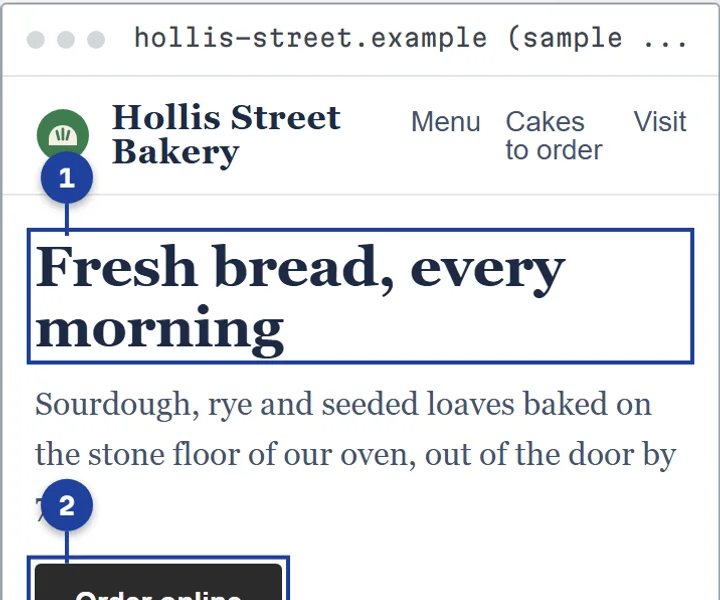
Paste the address of a page, or drop a zip of the built site. The page is laid on the bench, and the loupe magnifies the part under the pointer with its selector engraved beneath.
A click drops a numbered pin into that part and writes line 1 on the sheet. The number on the pin and the number on the line are the same, so the fitter knows which part every line is about.
Up to twenty pins on one sheet. A pin with nothing written on it stays in pencil and is not charged.
The loupe over the part, and the pin it drops.
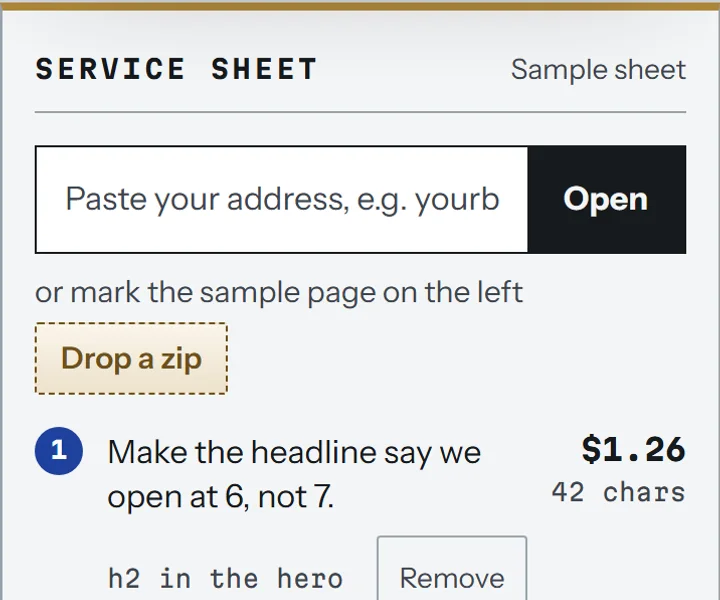
The line written, counted and priced as you type.
$29 minimum, once per sheet
Each line costs the characters of its note at the catalogue's rate. The rate comes from the catalogue on the day, not from this page, and the sheet shows it again on every keystroke.
“Change the opening hours to 7 to 18, Monday to Saturday” is 55 characters, so that line is $1.65. The $29 minimum is charged once for the whole sheet, never per line.
The whole sheet is paid by card before anyone touches the page. The total cannot grow after that.
Website maintenance cost for a small business, in numbers: Read the guide
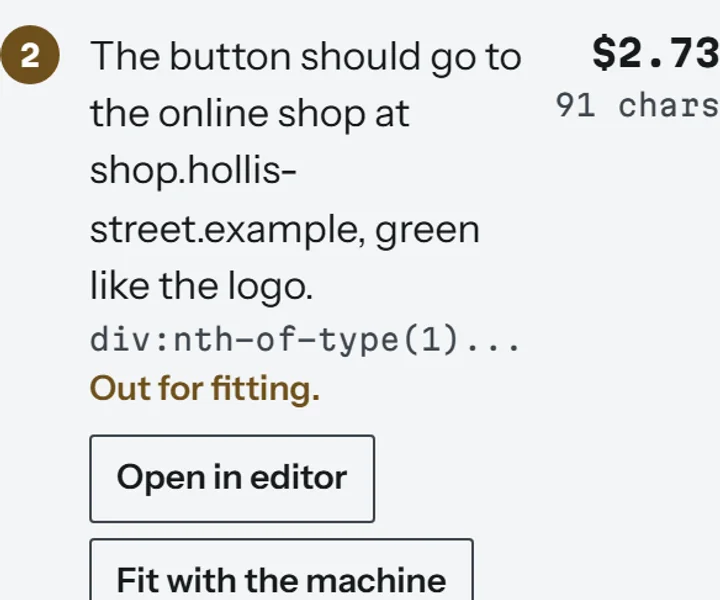
A fitter opens the page with your pins on it and the sheet beside it. Each line is fitted in the page's own files, by hand or with the machine taking the note as its brief, and a person looks at every part before it is marked fitted.
While a part is out for fitting, your sheet says so on that line and the page shows a labelled gap where the part sits.
The fitter's bench: each line with its tools.
Delivered: every part fitted, the card signed.
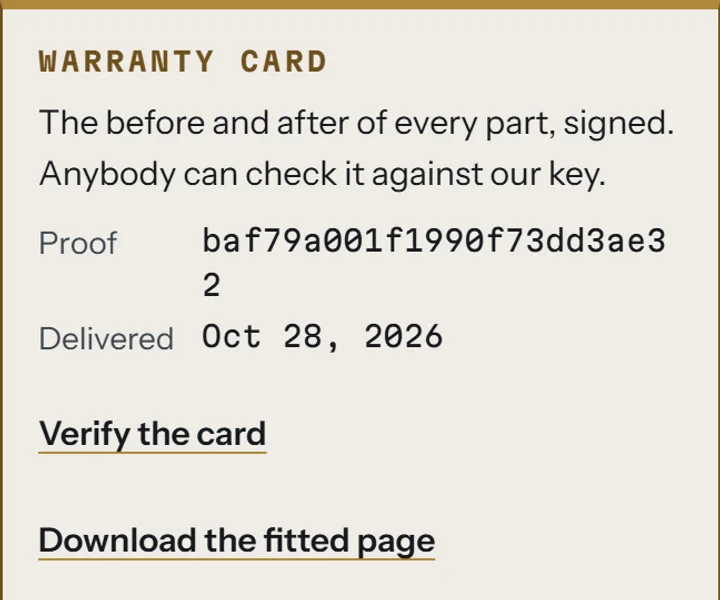
On delivery the page is shot before and after, the text of every part is recorded on both sides, and the record is signed. The sheet carries a before and after switch and the card with its verify link.
No card to show yet: the first signed sheet puts one here.
Paste the address of the page. It is laid under the loupe, you mark the parts, and the sheet prices each line as you write it.
The page lands on the bench under the loupe. Nothing is charged until you pay for the sheet.